In the South African construction and mining sectors, heavy machinery procurement operates on tight margins where equipment downtime and inaccurate invoicing can quickly erode project profitability. Traditional paper-based logbooks frequently cause friction between plant hire vendors and contractors, resulting in costly administrative standoffs. Resolving these standard billing conflicts requires a shift toward automated data capture. Advanced telematics systems eliminate human error, establishing a transparent, audit-ready operational framework for all parties.
The Root Causes of Yellow Metal Billing Disputes
Billing discrepancies on South African job sites typically stem from manual documentation gaps, fragmented communication, or differing interpretations of machine activity.
1. Idle Time vs. Active Operation
Standard plant hire contracts distinguish between active runtime (earthmoving, lifting, drilling) and stationary idling. Traditional methods rely on operators manually logging engine hours at the end of a shift, which frequently introduces human error. Contractors find themselves paying high hourly rates for machinery that spent significant time sitting idle due to site delays or fuel management inefficiencies.
2. Discrepancies in Digital Proof of Delivery (ePOD)
Disputes often emerge from the exact moment an asset arrives or departs a site. Disagreements over delayed drop-offs, unauthorized equipment extensions, or early collections create friction on the ledger when paper delivery slips are lost, damaged, or modified.
3. Unauthorized After-Hours Usage
Without continuous remote oversight, heavy equipment can be operated outside of authorized project hours, such as on weekends or night shifts, without the plant owner's knowledge. This leads to unexpected mechanical wear and unlogged fuel depletion, triggering complex disputes over who bears the financial responsibility.
How GPS Telemetry Restores Billing Accuracy
Modern fleet telematics systems resolve these administrative vulnerabilities by replacing human approximation with real-time, tamper-proof operational metrics.
[On-Site Asset Activity] ➔ [CAN-bus & GPS Sensors] ➔ [Cloud Dashboard Data] ➔ [Dispute-Free Invoicing]
Acemec Fleet Tracker
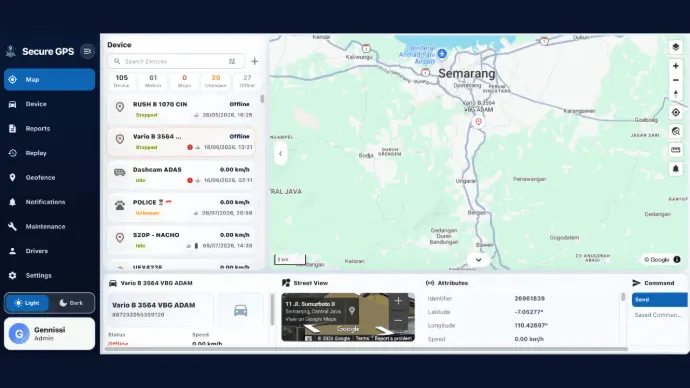
Acemec Fleet Management Software allows both fleet operators and project managers to access continuous, web-based telemetry tracking.
Automated Engine-Hour Tracking via CAN-bus
Advanced tracking hardware integrates directly into a machine's Controller Area Network (CAN-bus) interface. Rather than relying on simple battery ignition signals—which can falsely log active hours when a machine is switched on but static—the system monitors precise engine parameters, hydraulic pressure variations, and power take-off (PTO) engagement. This allows platforms to deliver precise machine-hour billing based on true mechanical work performed.
Virtual Boundaries and Automated Geofencing
Geofencing allows project managers to draw precise virtual boundaries around a construction footprint or a mining corridor. The moment a piece of yellow metal crosses these coordinate boundaries, an automated alert is triggered. This establishes a definitive, time-stamped log of exactly when an asset entered or exited a site, providing concrete data that streamlines delivery verification and eliminates arrival disputes.
Continuous Telematics Dashboard Integration
To scale operations effectively, construction companies require an integrated dashboard that acts as a single point of truth. Utilizing the specialized platform at the Acemec Fleet Management Software allows both fleet operators and project managers to access continuous, web-based telemetry tracking. By converting real-time location mapping and Diagnostic Trouble Code (DTC) readouts into clear operational data, the platform ensures that invoice generation aligns perfectly with true machine utilization.
Financial and Operational Advantages for South African Contractors
Implementing automated tracking offers clear financial benefits beyond simply resolving administrative billing disputes.
- Predictive Asset Maintenance: Telematics hardware reads DTC fault codes instantly, converting warning indicators into automated service notifications. This helps prevent catastrophic mechanical breakdowns on remote sites.
- Mitigating Fuel Fraud: Cross-referencing real-time GPS location tracking with fuel level sensors allows operators to identify sudden fuel drops or unauthorized siphoning, protecting site profit margins.
- Enhanced Liability Protection: Combining telematics logs with specialized AI dashcams provides undeniable, time-stamped video evidence in the event of site accidents, protecting companies against fraudulent insurance or labor claims.
- Remote Mobilization Control: Plant owners can securely disable heavy machinery from a remote dashboard if a contract default or security breach occurs, safeguarding high-value capital assets from unauthorized use.
Implementing a Dispute-Free Procurement Strategy
To establish an ironclad billing workflow, South African SMMEs should integrate telematics straight into their service level agreements (SLAs). Contracts must clearly state that automated engine hours captured via the platform will serve as the final authority for all invoicing calculations.
By linking automated data tracking with secure payment escrow infrastructure, companies can eliminate billing friction entirely. This automated workflow enables project teams to focus fully on meeting engineering and earthmoving milestones rather than auditing manual logbooks.